
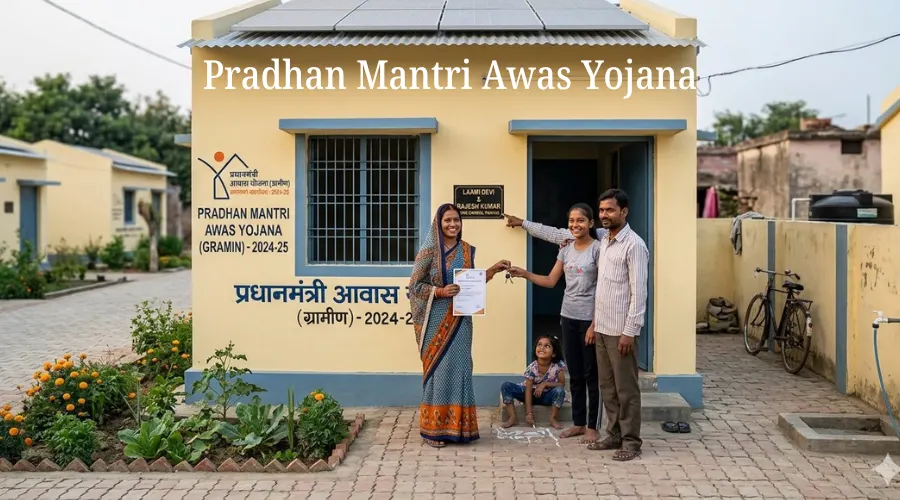
Pradhan Mantri Awas Yojana (PMAY) is one of the most ambitious social welfare programs launched by the Government of India to achieve “Housing for All.” Introduced in 2015, the scheme aims to provide affordable, safe, and permanent housing to millions of urban and rural families, especially those belonging to economically weaker sections (EWS), low-income groups (LIG), and middle-income groups (MIG).
Over the years, PMAY has played a transformative role in reducing India’s housing shortage, improving living standards, and promoting inclusive urban and rural development. This detailed guide explores every aspect of PMAY, including its objectives, components, eligibility, benefits, and overall impact.
📌 Objectives of PMAY
The primary objective of PMAY is to ensure that every Indian family has access to a pucca house with basic amenities such as water supply, sanitation, and electricity. The scheme is designed to address both urban and rural housing challenges.
Key Goals:
- Provide affordable housing to all eligible citizens
- Promote inclusive and sustainable urban development
- Empower women through property ownership
- Improve living conditions for the poor and marginalised
- Encourage eco-friendly construction practices
By focusing on these goals, PMAY aims to bridge the gap between housing demand and supply in India.
🏙️ Components of PMAY
PMAY is divided into two main verticals:
1. PMAY-Urban (PMAY-U)
This component targets the urban population, particularly those living in slums or inadequate housing conditions.
Key Features:
- Focus on cities and towns across India
- Includes multiple sub-components like CLSS, ISSR, AHP, and BLC
- Encourages private sector participation
- Promotes vertical expansion and redevelopment
2. PMAY-Gramin (PMAY-G)
PMAY-G focuses on rural housing needs and aims to provide pucca houses to rural households living in kutcha or dilapidated homes.
Key Features:
- Financial assistance for house construction
- Use of eco-friendly and disaster-resilient technologies
- Direct benefit transfer (DBT) to beneficiaries
- Integration with other schemes like the Swachh Bharat Mission
💰 Credit-Linked Subsidy Scheme (CLSS) under PMAY
One of the most popular features of PMAY is the Credit-Linked Subsidy Scheme (CLSS), which provides interest subsidies on home loans.
Subsidy Structure:
- EWS/LIG: Up to 6.5% interest subsidy
- MIG-I: 4% interest subsidy
- MIG-II: 3% interest subsidy
Benefits:
- Reduction in the loan principal amount
- Lower EMIs for borrowers
- Makes homeownership more accessible
CLSS has been a major driver in encouraging first-time homebuyers to invest in property.
🏚️ Key Vertical Schemes under PMAY-Urban
PMAY-Urban consists of four major verticals:
1. In-Situ Slum Redevelopment (ISSR)
- Uses land as a resource for redevelopment
- Provides free housing to slum dwellers
- Involves private developers
2. Affordable Housing in Partnership (AHP)
- Collaboration between the government and private developers
- Focus on mass housing projects
3. Beneficiary-Led Construction (BLC)
- Financial support for individuals to build or enhance their homes
- Suitable for those who already own land
4. Credit Linked Subsidy Scheme (CLSS)
- Provides interest subsidy on home loans
These verticals ensure flexibility and wide coverage across different income groups and housing needs.
👨👩👧👦 Eligibility Criteria
To benefit from PMAY, applicants must meet specific eligibility requirements.
General Criteria:
- Must not own a pucca house anywhere in India
- Should belong to EWS, LIG, or MIG category
- Must be an Indian citizen
Income Categories:
- EWS: Annual income up to ₹3 lakh
- LIG: ₹3 lakh to ₹6 lakh
- MIG-I: ₹6 lakh to ₹12 lakh
- MIG-II: ₹12 lakh to ₹18 lakh
Additional Conditions:
- Preference given to women, SC/ST, OBC, and minorities
- Female ownership or co-ownership is encouraged
- Applicants must not have availed of benefits from other housing schemes
📝 Application Process
Applying for PMAY is simple and can be done both online and offline.
Online Process:
- Visit the official PMAY website
- Select the relevant category (urban or rural)
- Enter Aadhaar details
- Fill in personal and income information
- Submit the application
Offline Process:
- Apply through Common Service Centres (CSCs)
- Approach banks or housing finance institutions
- Contact local municipal authorities
Applicants can also track their application status online.
🏗️ Financial Assistance and Subsidy Details
PMAY offers substantial financial support depending on the category and location.
PMAY-Urban:
- Subsidy on home loans under CLSS
- Central assistance for construction
PMAY-Gramin:
- Financial assistance up to ₹1.2 lakh (plain areas)
- Up to ₹1.3 lakh (hilly/difficult areas)
- Additional support for sanitation and utilities
The funds are transferred directly to beneficiaries’ bank accounts, ensuring transparency and efficiency.
🌱 Focus on Sustainability and Innovation
PMAY promotes the use of modern construction technologies and environmentally sustainable practices.
Key Initiatives:
- Use of eco-friendly materials
- Promotion of green buildings
- Adoption of innovative construction methods
- Energy-efficient housing designs
This not only reduces environmental impact but also ensures long-term cost savings for homeowners.
👩 Empowerment and Social Inclusion
One of the standout features of PMAY is its emphasis on women’s empowerment.
Key Measures:
- Mandatory female ownership or co-ownership in many cases
- Priority to widows, single women, and marginalised groups
- Inclusive approach covering SC/ST and minorities
By doing so, PMAY strengthens social equity and financial security for women.
📊 Impact of PMAY in India
Since its launch, PMAY has made significant progress in addressing India’s housing shortage.
Key Achievements:
- Millions of houses sanctioned and constructed
- Improved living standards for low-income families
- Reduction in slum population
- Boost to employment in construction and allied sectors
The scheme has also contributed to economic growth by stimulating demand in real estate, cement, steel, and other industries.
⚠️ Challenges and Limitations
Despite its success, PMAY faces certain challenges:
- Land availability in urban areas
- Delays in project completion
- Lack of awareness among beneficiaries
- Coordination issues between authorities
Addressing these challenges is crucial for achieving the scheme’s long-term goals.
🔮 Future Outlook
The government continues to expand and refine PMAY to reach more beneficiaries.
Future Focus:
- Faster project execution
- Increased private sector participation
- Enhanced digital monitoring systems
- Expansion to cover more beneficiaries
With continued efforts, PMAY is expected to play a vital role in shaping India’s housing future.
Want to say something? Post a comment
Want to say something? Post a comment
Recent Posts
- Rajiv Awas Yojana: Urban Housing Scheme Explained Simply
- Pradhan Mantri Awas Yojana Complete Affordable Housing Guide
- Comprehensive Guide to Housing Schemes in India
- AWHO Demand Surveys: Everything You Need to Know

- Armed Forces Housing Scheme in India: A Complete Guide for Homebuyers

- Easy Steps to Book Your Dream Home in Sobha Rivana

- Housing Scheme for Defence Personnel in India

- Land Allotment for Ex-Servicemen in India

- Cyber Arch Noida Extension

- Investing in Property in Rishikesh: A Comprehensive Guide